
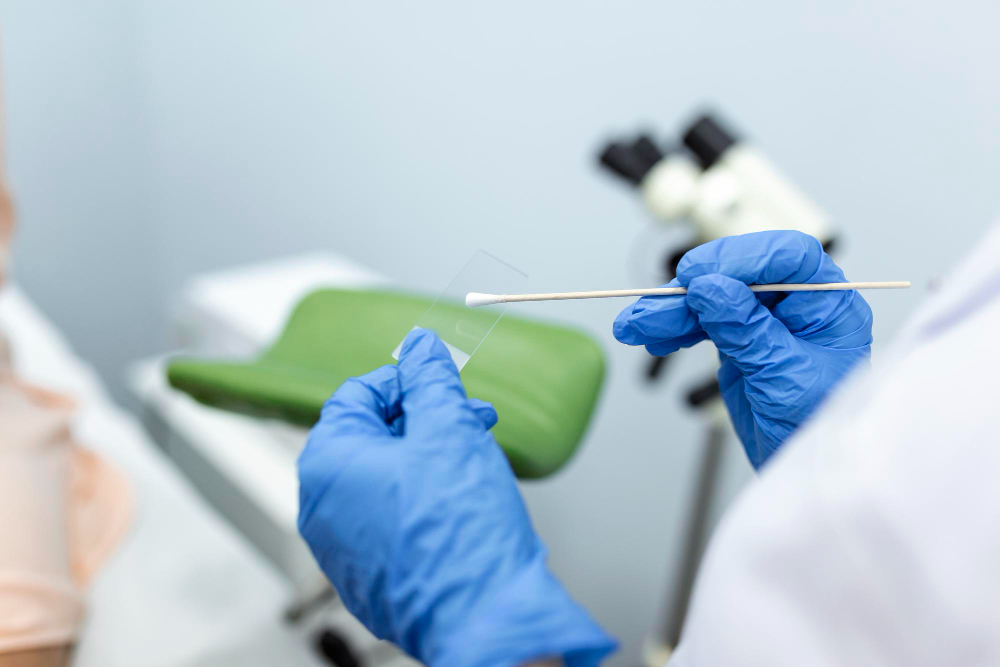
A Pap smear and HPV test are simple but vital tests for detecting cervical cancer. It works by identifying precancerous and cancerous cells on the cervix. Cells are collected from the uterine cervix and then examined under a microscope. At our Gynaecologist Claremont practice, Pap smears and HPV tests are recommended as part of routine gynaecological care to help prevent cervical cancer from developing. HPV vaccination is an important preventative measure to reduce risk.
Women are advised to have their first Pap smear within the first three years of becoming sexually active, and then at intervals suggested by their doctor. Regular testing provides peace of mind and helps detect abnormal cells before they progress. All women over 25 years old should have HPV testing with guidance from our gynaecologist in Claremont.
A vaccine is available to protect against the most aggressive strains of the Human Papilloma Virus (HPV), which can cause abnormal cells that could progress to cancer. This is ideally administered before sexual activity starts but is still relevant for women of all ages. Dr Philip Zinn, our gynaecologist in Claremont, can explain the role of this vaccine for your protection or for that of your loved ones.
What does an abnormal Pap smear mean?
Samples are tested in a laboratory to check for abnormal cells. If no HPV or cell changes are found, results are reported as normal. If high-risk HPV or abnormal cells are present, Dr Philip Zinn, our gynaecologist in Claremont, will explain your results clearly and guide you through the steps.
It is important to remember that abnormal does not always mean cancer. In most cases, it indicates changes that require monitoring or treatment to prevent future problems.
What if my test comes back abnormal?
Keep in mind that not all abnormal cells are cancerous. There may need to be a repeat test or a further examination, called a colposcopy, to confirm the first result. Depending on the nature of the abnormality, Dr Zinn, our gynaecologist in Claremont, will explain what is necessary to treat it effectively.
Treatment options:
- Observation and retesting may be recommended for mild abnormalities, which frequently get better without treatment.
- Removal of the abnormal cells with a procedure called a loop excision (LLETZ / LEAP).
- More extensive surgery is sometimes necessary for recurrent abnormalities or when a cancer occurs.
Follow-up appointments are critical and will be explained depending on the results. This ensures that no abnormal cells have returned and reduces the risk of complications.
Book your consultation
Cervical health should never be overlooked. If you are due for a Pap smear or have received abnormal results, book an appointment with Dr Philip Zinn Inc, a Gynaecologist in Claremont, at Life Kingsbury Hospital. Regular testing can make all the difference in protecting your future health.